
 March/April 2015
Story & Photography by Gail G. Collins
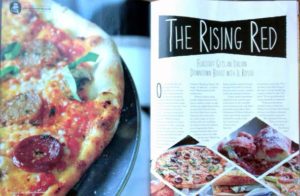 On a recent foodie tour through New York City with our son, who works in the restaurant industry, we wandered into Mario Batali’s Eataly. The conglomeration of corner shops under one roof, if you will—from pasta and sweets to fish and meats—contains hundreds of thousands of imported Italian products. While putting a damper on eating local, such a display does invoke a yearning for tomato sauce. In fact, the celebrity chef believes making red sauce should be the first lesson of every kitchen novice. And yes, his recipe employs canned tomatoes. Shocking, I know. “It’s simple, it’s delicious … it almost hurts,” Batali summed in the introduction. Continue reading “The Rising Red”
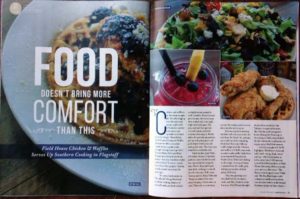 Chicken and waffles is as
  American as apple pie. But after digging into this sweet and savory combo, full of Southern comfort and mama, you probably won’t have room for the pie. Nevertheless, Field House Chicken & Waffles Restaurant offers a decadent maple bacon cupcake moist enough to tempt you to go for it. Owners Ryan Field and Brian Terpay opened the down-home eatery—the only “southern-styled, tried and true” in town—across from their other project, Taverna, which opened more than five years ago.
 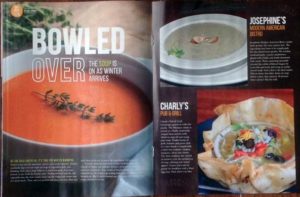 As the cold creeps in, it’s time for winter warmers. Soup is a top pick for nutrition, variety and comfort reasons. Dietary standards urge us to eat eight servings of veg daily, and blending them into a soup helps us to reach that goal. And when pureed, it also fools the finicky eater. Tossing leftovers and the odd vegetables into the slow cooker clears out the fridge and creates one-of-a-kind meals. Then, add lean protein and beans for extra fiber and cook them in the pot to retain the ingredients’ full potential.
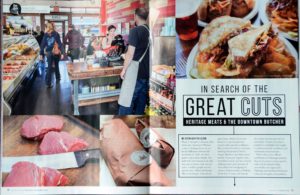 We often hear the cliché: There is strength in diversity. But what does that mean? When it comes to heritage farms, it can be the difference between life and death. In 1845, the Irish potato crop suffered blight. The bulk of farmers had planted only one type of potato, and over six years, a million people starved and another million left Ireland. This is the danger of industrial agriculture, which utilizes few breeds or crops to maximize output under specific conditions. Here is the bottom line on factory farming: 60 percent of beef is Angus, Hereford and Simmental breeds; 75 percent of pork comes from three breeds; and four breeds of sheep make up 60 percent of the market with a whopping 40 percent of that number as Suffolk. In the last 15 years, 200 breeds of animals have become extinct worldwide. Genetic diversity is essential to a healthy food supply to withstand harsh conditions and unforeseen circumstances.
 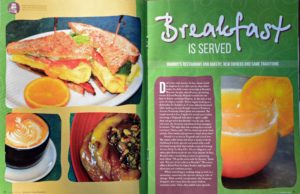 Don’t mess with success. In fact, diners could be forgiven if, over their quiche, they didn’t notice the shift to new ownership at Brandy’s. That was the plan after 20 years, as retiring owners Ed and Brandy Wojciak handed over the keys to Kelsey and Jamie Drayton. In the end, it was more of a legacy transfer. Kelsey began working as a dishwasher for Brandy’s at 15 years old and advanced while working his way through classes at Northern Arizona University where Jamie also attended. The couple moved to Los Angeles for several years before returning to Flagstaff with plans to open a coffee shop and got wind that Brandy’s was for sale. Over two years, the Draytons transitioned from managers to owners. “We kept what was working for a smooth transition,” Kelsey said. “All the dishes are made from scratch, from batters and pastries to hand-sliced fries.”
 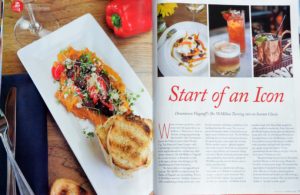 When you have a good idea, and it turns out to be a great idea, you build on it. That’s exactly what an Arizona managing partnership that includes Tyler Christensen—known for Valley hotspots Little Woody, Vig, The King and Linger Longer—did. Capitalizing on underutilized properties to build neighborhood bars and kitchens, their newest venture is The McMillan in Flagstaff. Its historic location on Route 66, as well as the space, revives a family legacy while contributing to a lively downtown.
 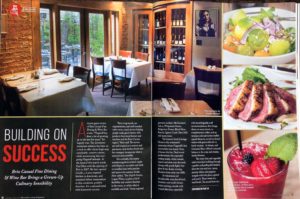 A recent guest review of Brix Casual Fine Dining & Wine Bar wrote, “Flagstaff has done a lot of growing up in the last few years.” It’s happily true. The downtown restaurant industry has been on a track to offer clients high end, sustainable, creative cuisine, while maintaining that easy-going Flagstaff attitude. At the head of this march strode Paul Moir with the opening of Brix in 2007. He later opened Criollo, a Latin-inspired kitchen in downtown and mentored fellow restaurateurs in this consistent, positive direction. It’s a national trend with hometown success.
 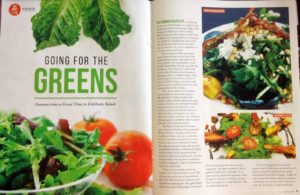 As summer heats up, it is enticing to eat cool. Vivid displays of veggies in the farmers market or stores inspire light, fresh eating and salads are a natural choice. Still, greens are often resigned to the likes of rabbit food, wimpy diet fare or a boring bed of lettuce. Change that notion with this round-up of local restaurants that toss in colorful and creative ingredients to construct salad sensations.
  Sweet temptation has always been there. People have enjoyed fruits, nuts and honey since ancient times. Today, those ingredients are still among the basic elements used to craft tantalizing treats, yet celebrated chefs and global inspiration have happily pushed flavor boundaries beyond standard cookies and cakes. From classic cravings to artisan accents, here is a local look at Flagstaff’s sweetest things.
 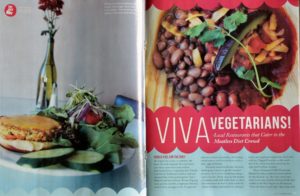 The higher the octane, or nutrition, the better the body responds. For that reason and others, more than seven million Americans choose a vegetarian diet. It tends to be low in cholesterol as well as total and saturated fats, which guard against Type 2 Diabetes and heart disease. Besides forgoing meat, poultry and fish, a vegetarian diet may include dairy and eggs or not. A vegan diet adheres to stricter boundaries, eliminating animal sources and their products, such as milk, eggs and honey.